
-

Principles of the Law of Software Contracts, Tentative Draft No.1
Robert A. Hillman, Maureen A. O'Rourke, and American Law Institute
-
Law and Ethics in Rationing Access to Care in a High-Cost Global Economy
Wendy K. Mariner and Paula Lobato de Faria
-
American Constitutional Interpretation, 4th ed.
Walter F. Murphy, James E. Fleming, Sotirios A. Barber, and Stephen Macedo
-
Eloquence and Reason: Creating a First Amendment Culture
Robert L. Tsai
This provocative book presents a theory of the First Amendment’s development. During the twentieth century, Americans gained trust in its commitments, turned the First Amendment into an instrument for social progress, and exercised their rhetorical freedom to create a common language of rights.
Robert L. Tsai explains that the guarantees of the First Amendment have become part of a governing culture and nationwide priority. Examining the rhetorical tactics of activists, presidents, and lawyers, he illustrates how committed citizens seek to promote or destabilize a convergence in constitutional ideas. Eloquence and Reason reveals the social and institutional processes through which foundational ideas are generated and defends a cultural role for the courts.
-
Digital Consumption Tax (D-CT)
Richard Thompson Ainsworth and Hiroki Akioka
Modern technology is dramatically changing the way consumption taxes are collected, but it is also changing the way policymakers assess the operation and impact of these taxes. Whether the design is a standard credit-invoice value added tax (VAT) of European design, or a retail sales tax (RST) of American design, or the credit subtraction VAT without invoices type of consumption tax (CT) of Japanese design, technology is having a profound impact. This book begins and ends with a tax reform. It starts with a proposal to the President's (George W. Bush's) Advisory Panel on Federal Tax Reform, and ends with a proposal for the consideration of Prime Minister Junichiro Koizumi's Tax Commission. Neither tax reform commission appears at the moment to be considering technological solutions, although both are critically interested in consumption taxes. In the U.S. case both of the identified structural barriers to a federal level VAT (federal-state coordination and regressivity) can be answered technologically. In the Japanese case a wholesale transformation of the CT is under consideration; one that would move the Japanese CT to an invoice system with multiple rates and a standard rate of 10 percent or higher. The structural departure that this proposal makes from the traditional Japanese CT need not be taken if technological solutions are applied, although the double digit rate increase seems to be a given for revenue reasons.
-
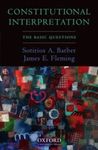
Constitutional Interpretation: The Basic Questions
Sotirios A. Barber and James E. Fleming
What is the nature of the US Constitution? How ought it to be interpreted? Ronald Dworkin famously argued that fidelity in interpreting the Constitution as written calls for a fusion of constitutional law and moral philosophy. Sotirios A. Barber and James E. Fleming take up that call, arguing for a philosophic approach to constitutional interpretation. In doing so, they systematically criticize competing approaches — textualism, consensualism, originalism, structuralism, doctrinalism, minimalism, and pragmatism — that aim and claim to avoid a philosophic approach. They show that none can responsibly avoid philosophic reflection and choice in interpreting the Constitution. At the same time, Barber and Fleming demonstrate that a philosophic approach, properly understood, does not turn its back on traditional sources of constitutional meaning. It is in fact the most defensible approach to constitutional text and history. They emphasize that the philosophic approach is a fusion of approaches. Within such a fusion, interpreters would view text, intentions, consensus, structures, and doctrines not as alternatives to but as sites of philosophic reflection and choice about the best understanding of our constitutional commitments. Nor does the philosophic approach demand that judges and other interpreters of the Constitution become philosophers. It demands only that interpreters think self-critically and take public responsibility for the moral choices that they inevitably make in faithfully interpreting the Constitution. The book offers both a succinct overview of approaches to constitutional interpretation and a powerful argument for a philosophic approach.
-
Trust and Honesty in the Real World: A Joint Course for Lawyers, Business People and Regulators
Mark Fagan and Tamar Frankel
A case study companion to Trust and honesty: America's business culture at a crossroad by Tamar Frankel
-
Labor Law: Cases, Materials, and Problems, 6th ed.
Michael C. Harper, Samuel Estreicher, and Joan Flynn
-
The Compliance Function in Diversified Financial Institutions: Harmonizing the Regulatory Environment for Financial Services Firms
Cornelius K. Hurley and John A. Beccia
-
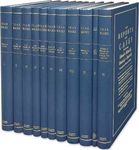
Year Books
David J. Seipp and Carol F. Lee
The Year Books are the law reports of medieval England. The earliest examples date from about 1268, and the last in the printed series are for the year 1535. The Year Books are our principal source materials for the development of legal doctrines, concepts, and methods from 1290 to 1535, a period during which the common law developed into recognizable form. More than 22,000 individual reports or ‘pleas’ have been printed, and others remain in manuscript. This database indexes all year book reports printed in the chronological series for all years between 1268 and 1535, and many of the year book reports printed only in alphabetical abridgements. Of these reports, all 6,901 from 1399 through 1535 have been fully indexed and paraphrased in this database.
-
Public Health Law
Kenneth R. Wing, Wendy K. Mariner, George J. Annas, and Daniel S. Strouse
This new book includes a set of introductory readings, first on the history and scope of public health, then on the basic constitutional principles that define the scope and limits of government power, followed by a series of case studies of specific public health problems. Each case study chapter focuses on one particular set of public health problems and analyzes the legal and political parameters within which these problems can and should be addresses. The chapters are organized in a way that develops themes and highlights recurring issues and paradigms, with the final chapter bringing many of these together in an integrated way. Each chapter includes references to additional and supplemental materials, and provides citations to websites and other sources for updating these materials. The authors also highlight the international dimensions of each of the problem areas covered in the materials.
Coverage of Public Health Law includes:
• Chapter 1: An Introduction to Public Health in the United States
• Chapter 2: Basic Constitutional Principles Applicable to the Exercise of State Authority Relating to Public Health
• Chapter 3: Contagious Diseases: Quarantine and Other Liberty-Restricting Responses
• Chapter 4: Public Health Surveillance and Medical Information Privacy
• Chapter 5: Tobacco, Smoking, and the Public's Health
• Chapter 6: Health Promotion and Education: Encouraging Healthy Personal Behavior
• Chapter 7: Firearms and Gun Control
• Chapter 8: (Bio)Terrorism -
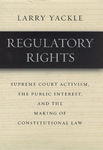
Regulatory Rights: Supreme Court Activism, the Public Interest, and the Making of Constitutional Law
Larry Yackle
We often hear—with particular frequency during recent Supreme Court nomination hearings—that justices should not create constitutional rights, but should instead enforce the rights that the Constitution enshrines. In Regulatory Rights, Larry Yackle sets out to convince readers that such arguments fundamentally misconceive both the work that justices do and the character of the American Constitution in whose name they do it. It matters who sits on the Supreme Court, he argues, precisely because justices do create individual constitutional rights.
Traversing a wide range of Supreme Court decisions that established crucial precedents about racial discrimination, the death penalty, and sexual freedom, Yackle contends that the rights we enjoy are neither more nor less than what the justices choose to make of them. Regulatory Rights is a bracing read that will be heatedly debated by all those interested in constitutional law and the judiciary. -
Administrative Law: Cases and Materials, 5th ed.
Jack M. Beermann, Colin S. Diver, and Ronald A. Cass
-
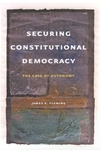
Securing Constitutional Democracy: The Case of Autonomy
James E. Fleming
Famously described by Louis Brandeis as “the most comprehensive of rights” and ’the right most valued by civilized men,” the right of privacy or autonomy is more embattled during modern times than any other. Debate over its meaning, scope, and constitutional status is so widespread that it all but defines the post-1960s era of constitutional interpretation. Conservative Robert Bork called it “a loose canon in the law,” while feminist Catharine MacKinnon attacked it as the “right of men to be left alone to oppress women.” Can a right with such prominent critics from across the political spectrum be grounded in constitutional law?
In this book, James Fleming responds to these controversies by arguing that the right to privacy or autonomy should be grounded in a theory of securing constitutional democracy. His framework seeks to secure the basic liberties that are preconditions for deliberative democracy—to allow citizens to deliberate about the institutions and policies of their government—as well as deliberative autonomy—to enable citizens to deliberate about the conduct of their own lives. Together, Fleming shows, these two preconditions can afford everyone the status of free and equal citizenship in our morally pluralistic constitutional democracy. -
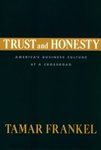
Trust and Honesty: America's Business Culture at a Crossroad
Tamar Frankel
America's culture is moving in a new and dangerous direction, as it becomes more accepting and tolerant of dishonesty and financial abuse. Tamar Frankel argues that this phenomenon is not new; in fact it has a specific traceable past. During the past thirty years temptations and opportunities to defraud have risen; legal, moral and theoretical barriers to abuse of trust have fallen. She goes on to suggest that fraud and the abuse of trust could have a widespread impact on American economy and prosperity, and argues that the way to counter this disturbing trend is to reverse the culture of business dishonesty. Finally, she presents the following thesis: If Americans have had enough of financial abuse, they can demand of their leaders, of themselves, and of each other more honesty and trust and less cynicism. Americans can reject the actions, attitudes, theories and assumptions that brought us the corporate scandals of the 1990s. Though American society can have "bad apples," and its constituents hold differing opinions about the precise meaning of trust and truth, it can remain honest, as long as it aspires to honesty.
-
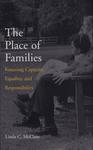
The Place of Families: Fostering Capacity, Equality, and Responsibility
Linda C. McClain
In this bold new book, Linda McClain offers a liberal and feminist theory of the relationships between family life and politics—a topic dominated by conservative thinkers. McClain agrees that stable family lives are vital to forming persons into capable, responsible, self-governing citizens. But what are the public values at stake when we think about families, and what sorts of families should government recognize and promote?
Arguing that family life helps create the virtues and character required for citizenship, McClain shows that the connection between family self-government and democratic self-government does not require the deep-laid gender inequality that has historically accompanied it. Examining controversial issues in family law and policy—among them, the governmental promotion of heterosexual marriage and the denial of marriage to same-sex couples, the regulation of family life through welfare policy, and constitutional rights to reproductive freedom—McClain argues for a political theory of the family that embraces equality, defends rights as facilitating responsibility, and supports families in ways that respect men’s and women’s capacities for self-government.
-
Copyright in a Global Information Economy, 2nd ed.
Maureen A. O'Rourke, Julie E. Cohen, Lydia Pallas Loren, and Ruth L. Okediji
-
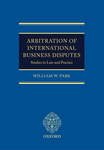
Arbitration of International Business Disputes: Studies in Law and Practice
William W. Park
Arbitration of International Business Disputes: Studies in Law and Practice is a collection of articles by William W. Park, one of the leading scholars in international commercial arbitration. The book is a coherent and focused collection of his most significant and timeless articles on business dispute arbitration. The essays address some of the most controversial and interesting questions that have arisen in cross-border business dispute resolution over the past 25 years, particularly in relation to trade, finance and investment disputes.
In this rapidly growing and evolving area of law, many of these debates have recurred over several decades and remain subject to radically different views. Examples of the issues examined by Professor Park are the proper role of national arbitration statutes, investment arbitration under free trade agreements, and the balance between fixed rules and arbitral discretion.
The book is structured around five themes: procedural evolution in business arbitration; issues surrounding the legal framework (such as arbitral jurisdiction, the effect of annulment, and investment arbitration); arbitral proceedings, which focuses on the tensions between fairness and efficiency, and substantive norms ; and a comparison of the application of arbitration to the areas of finance, intellectual property and taxation.
The original articles have been thoroughly revised and updated to provide a contemporary perspective, while the collection is prefaced by a major new article, Procedural Evolution in Business Arbitration: Three Studies in Change, which draws together the key themes. The foreword has been written by Gabrielle Kauffmann-Kohler, President of the Swiss Arbitration Association. The book will appeal to serious arbitration practitioners and academics alike.
- Collection of significant and timeless articles by a leading scholar in international commercial arbitration
- Fully revised and updated to ensure relevance to the international arbitration lawyer working today
- William W. Park's essays examine some of the most controversial and interesting issues in cross-border business dispute resolution of the last twenty five years, many of which remain subject to radically different views
- The text is prefaced by a major new article, Procedural Evolution in Business Arbitration: Three Case Studies, which draws together the key themes of the book
- Includes a Foreword by Gabrielle Kauffmann-Kohler, President of the Swiss Arbitration Association
- This is an essential text for serious arbitration academics and practitioners alike
-
Sexual Orientation and the Law: A Research Bibliography Selectively Annotating Legal Literature Through 2005
Ronald E. Wheeler, James M. Donovan, James G. Durham, and Stephanie Wilson
This bibliography was conceived as an update to the 1994 original (Law Library Journal, Winter 1994), rather than as a wholly new work. For that reason its design follows closely the topical outline of its predecessor. Alterations to that outline provide suggestive indicators of the extent to which legal realities have changed in the interim. This version also features an attention to foreign and international aspects of sexual orientation law that were missing in the prior documents.
-
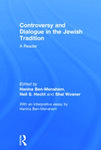
Controversy and Dialogue in the Jewish Tradition: A Reader
Hanina Ben-Menahem, Neil S. Hecht, and Shai Wosner
Controversy is the main instrument by which Judaism develops and shapes its philosophy, theology and law. The rabbinical literature speaks with many voices, debating virtually every subject, and failing to reach a consensus on many. However, this willingness to condone controversy is accompanied by much deliberation. Controversy, and its legal, philosophical and social ramifications, was and remains of unparalleled concern to the rabbis. Today, we are also witness to a burgeoning academic interest in controversy and pluralism in Jewish law.
This book is an anthology of passages from the rabbinical literature that address the phenomenon of controversy in Jewish law, affording the English-speaking reader the opportunity for a first-hand encounter with this fascinating material. An extensive analytical introduction contextualizes the material from a philosophical perspective.
-
Securitization: Structured Financing, Financial Assets Pools, and Asset-backed Securities, 2nd ed.
Tamar Frankel and Ann Taylor Schwing
-
The Law and Ethics of Lawyering, 4th ed.
Geoffrey C. Hazard, Susan P. Koniak, Roger C. Cramton, and George M. Cohen
-
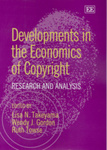
Developments in the Economics of Copyright: Research and Analysis
Lisa N. Takeyama, Wendy J. Gordon, and Ruth Towse
This innovative and insightful book, written by some of the leading academics in the field, advances research frontiers on intellectual property and copyright issues. Topics addressed include: peer-to-peer music file sharing, optimal fair use standards, the benefits of copyright collectives, copyright and market entry, alternatives to copyright, the impact of copyright on knowledge production, the proper balance between copyright and competition law, and the application of systematic principles to issues that arise at the periphery of intellectual property law – all with an eye toward economics.
-
Foundations of the Law and Ethics of Lawyering
George M. Cohen and Susan P. Koniak
This work is a collection of articles that explore the tension between the law governing the conduct of lawyers and the complex ethics of lawyering that pulls against that law and competes with it. This collection emphasizes the regulatory framework that has developed to govern the conduct of lawyers and draws heavily on the work of law and economics scholars.
-
Cases and Materials on Employment Discrimination and Employment Law, 2nd ed.
Samuel Estreicher and Michael C. Harper
-
Federal Administrative Law, 3rd ed.
Gary S. Lawson
Professor Lawson has adopted three strategies to reduce the Administrative Law course to a manageable set of materials.
First and most importantly, the book deliberately concentrates on federal administrative law, to the near total exclusion of state administrative law.
Second, the book concentrates on administrative law, e.g., the casebook is self-consciously doctrinal, focusing on the formal legal doctrines that establish the framework within which policymakers, lobbyists, and lawyers can ply their trades.
Third, the book strongly emphasizes the four fundamental branches of administrative law: the constitutional foundations of the administrative state, the law (both constitutional and statutory) governing agency rulemaking and adjudicatory procedures, the law governing the timing and availability of judicial review.
The book is student-friendly, designed to tell the story of modern federal administrative law in a straightforward yet sophisticated fashion.
-
The Constitution of Empire: Territorial Expansion and American Legal History
Gary S. Lawson and Guy Seidman
The Constitution of Empire offers a constitutional and historical survey of American territorial expansion from the founding era to the present day. The authors describe the Constitution’s design for territorial acquisition and governance and examine the ways in which practice over the past two hundred years has diverged from that original vision.
Noting that most of America’s territorial acquisitions—including the Louisiana Purchase, the Alaska Purchase, and the territory acquired after the Mexican-American and Spanish-American Wars—resulted from treaties, the authors elaborate a Jeffersonian-based theory of the federal treaty power and assess American territorial acquisitions from this perspective. They find that at least one American acquisition of territory and many of the basic institutions of territorial governance have no constitutional foundation, and they explore the often-strange paths that constitutional law has traveled to permit such deviations from the Constitution’s original meaning. -
The Economics of Copyright: Developments in Research and Analysis
Wendy J. Gordon and Richard Watt
Presenting a selection of innovative research contributions written by some of the best-known academics in the field, The Economics of Copyright covers issues that are at the forefront of the implementation and management of copyright.
The book touches on all aspects of copyright management including the effects of copyright piracy, optimal contractual arrangements between authors and publishers, copyright and antitrust issues, and collective management of copyright. This selection of papers not only shows how fruitful the study of copyright from an economic theory perspective has been, but they also clearly indicate the directions (and analytical tools) that will be of principal interest over the next few years, as research in this area flourishes.
Both legal scholars specialising in intellectual property and applied economics scholars will find this book of importance, as will organisations dealing with the management and protection of intellectual property rights. The book will also be good reading for any advanced university course dealing with the economics of copyright.
-
Labor Law: Cases, Materials, and Problems, 5th ed.
Michael C. Harper, Samuel Estreicher, and Joan Flynn
-
Antitrust Law: Economic Theory and Common Law Evolution
Keith N. Hylton
This book is an effort to consolidate several different perspectives on antitrust law. First, Professor Hylton presents a detailed description of the law as it has developed through numerous judicial opinions. Second, the author presents detailed economic critiques of the judicial opinions, drawing heavily on the literature in law and economics journals. Third, Professor Hylton integrates a jurisprudential perspective into the analysis that looks at antitrust as a vibrant field of common law. This last perspective leads the author to address issues of certainty, stability, and predictability in antitrust law, and to examine the pressures shaping its evolution. The combination of these three perspectives offers something new to every student of antitrust law. Specific topics covered include perfect competition versus monopoly, enforcement, cartels, section 1 doctrine, rule of reason, agreement, boycott, power, vertical restraints, tying and exclusive dealing, horizontal mergers, and conglomerates.
- Most up-to-date text on US antitrust law for law students and economics graduate students
- Book's orientation is comprehensive in its coverage of topics; contains very little mathematics
- Professionals interested in law and economics will find this a useful resource; fills a real gap in the legal classroom
-
Rights and Resources
Frances H. Miller
The fulfilment of health care rights in a world where resources are scarce is a prominent issue. In this volume, Frances H. Miller introduces studies on a wide variety of aspects of this important yet complex process.
-
American Constitutional Interpretation, 3rd ed.
Walter F. Murphy, James E. Fleming, Sotirios A. Barber, and Stephen Macedo
-
Managerial Economics, 4th ed.
William Samuelson and Stephen G. Marks
In today's highly competitive business environments, managers must be able to make increasingly complex decisions-decisions that sometimes determine whether a firm prospers or even survives. Now more than ever, top-notch managers are relying on economic analysis to make the right business decisions.
That's why William F. Samuelson and Stephen G. Mark's Fourth Edition of MANAGERIAL ECONOMICS illustrates the central problems you're likely to face as a manager, provides the economic analysis techniques you need to guide your decisions, and shows how these techniques are used by practicing managers. Updated with modern management techniques, Fourth Edition features many revised applications, and new and expanded coverage of game theory, decision making under uncertainty, international topics, e-commerce, and the Internet.
Books written, edited, and contributed to by Boston University School of Law faculty members.
Printing is not supported at the primary Gallery Thumbnail page. Please first navigate to a specific Image before printing.